VXLAN Benefits over VLAN
VLANs have been used in networking infrastructures for many years now to solve different problems. You can use VLANs to enforce Layer 2 isolation, as policy enforcement points, and as routing interface identifiers. Network services such as firewalls have used VLANs to steer traffic. Support for VLANs is now available in most operating systems, NICs, network equipment (for example, switches, routers, firewalls, and so on), and in most virtualization solutions.
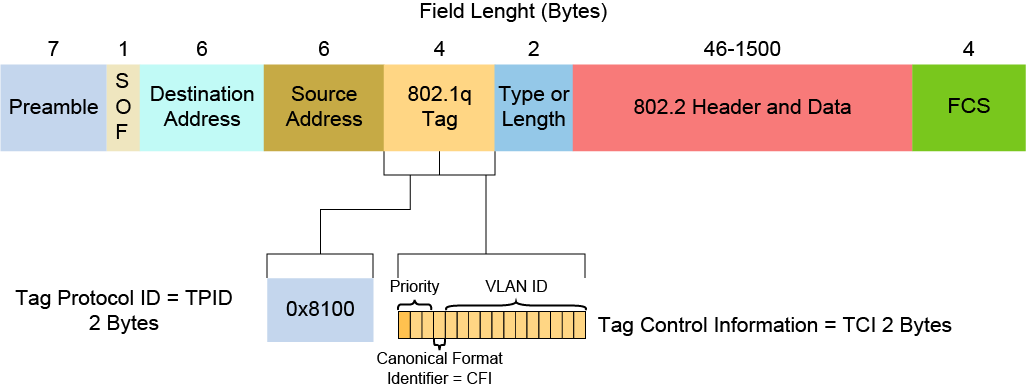
When designing virtualized data centers, you begin to face some shortcomings of VLANs. The IEEE 802.1Q standard specifies the VLAN ID length as 12 bits, which restricts the number of VLANs in a single switched Layer 2 domain to a maximum of 4096. In addition, some VLAN IDs are usually reserved for well-known uses, which further restricts this range.
To support environments that accommodate different tenants in the same underlying physical infrastructure, each tenant needs to have the ability to create multiple Layer 2 and Layer 3 networks within their own slice of the virtualized data center. This requirement drives the need for more Layer 2 networks.
Although VLAN Trunking Protocol (VTP) exists as a protocol for creating, disseminating, and deleting VLANs, and for pruning them for optimal extent, most networks disable it. In a data center that supports cloud tenancies, some sort of manual coordination is required between the network administrator and the tenant administrator to transport VLANs over existing switches. You cannot easily use VLANs for virtual data centers when there are physical constraints of distance and deployment. Although the VLAN concept provides a level of network virtualization, you should consider the extended features that VXLAN offers when you need to address a large environment that requires virtualization.
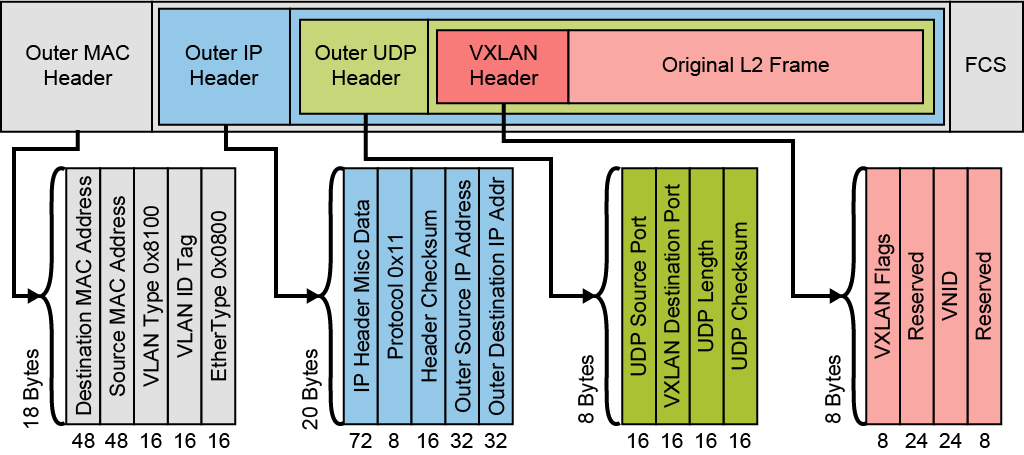
As the name VXLAN implies, the technology is meant to provide the same services to connected Ethernet end systems that VLANs provide today, but in a more extensible manner. Compared to VLANs, VXLANs are extensible regarding the scale and the reach of a deployment.
While the 802.1Q VLAN ID space is only 12 bits, the VXLAN ID space is 24 bits. This doubling in size allows the VXLAN ID space to increase by over 400,000 percent to over 16 million unique identifiers and should provide sufficient room for expansion for years to come.
VXLANs use IP (both unicast and multicast) as the transport medium. The ubiquity of IP networks and equipment allows you to extend the end-to-end reach of a VXLAN segment far beyond the typical reach of VLANs using 802.1Q today.
Each VXLAN segment can be highly distributed among the networking nodes. With so many segments, the number of end systems that are connected to any one segment is expected to be relatively low. Therefore, the percentage of networking nodes that participate in any one segment will also be low.
The benefits of using VXLAN are as follows:
Highly dynamic end systems: End systems that are connected to VXLANs can be very dynamic in terms of creation, deletion, and power-on and -off, and in terms of mobility across the network nodes.
VXLANs work with existing, widely deployed network equipment: This benefit translates into Ethernet switches and IP routers. A single administrative domain administers the network infrastructure. This aspect is consistent with operation within a data center, and not across the Internet.
Low network node overhead and simple implementation: With the requirement to support very large numbers of network nodes, the resource requirements on each node should not be excessive in terms of memory footprint or processing cycles. This requirement also considers hardware offload.