Practice Activity: Design Your VXLAN Network
Scenario
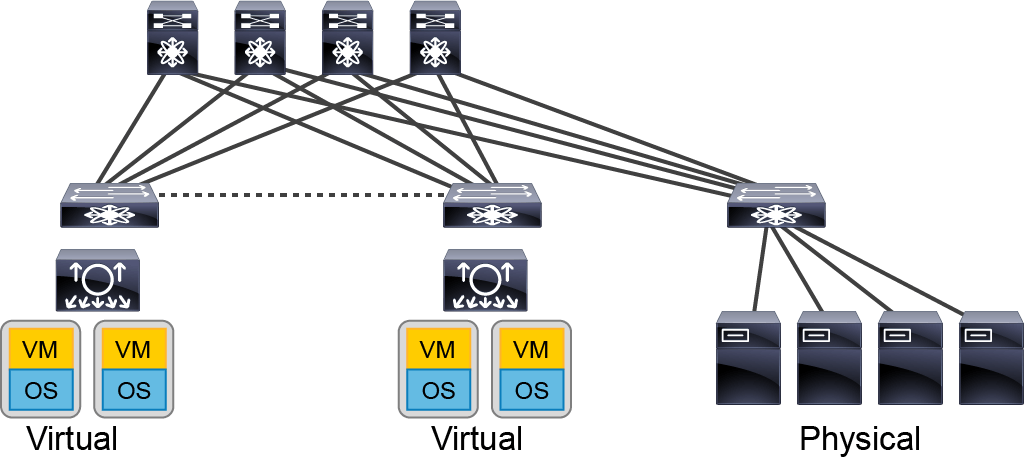
You are running a multitenant data center. Soon, you will have many different VMs that belong to many different customers so you need more Layer 2 segments than VLANs can offer. Therefore, you design your data center with VXLANs. In this activity, you will answer design challenges related to your VXLAN network.
Topology
Content Review Question
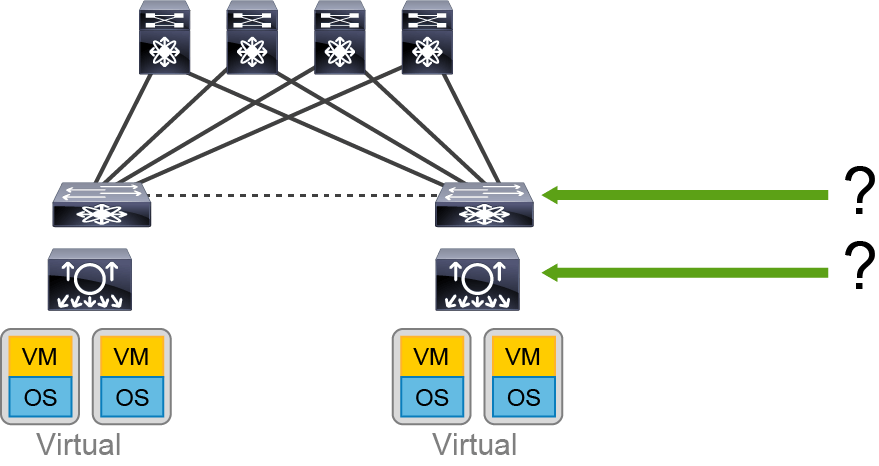
Assume that you have a data center that is running only virtualized devices. Both hypervisors and top-of-rack switches are capable of functioning as VTEPs. Where would you enable the VTEP functionality and why?
Content Review Question
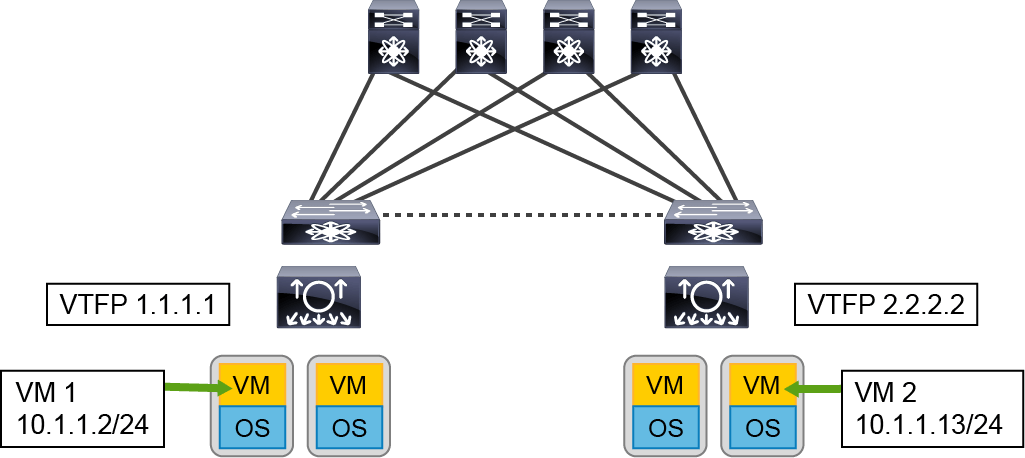
You have VM 1 and VM 2, and you want both VMs to belong to the same VXLAN. How would you configure your network? Assume that you are using multicast-enabled VXLAN implementation.
Content Review Question
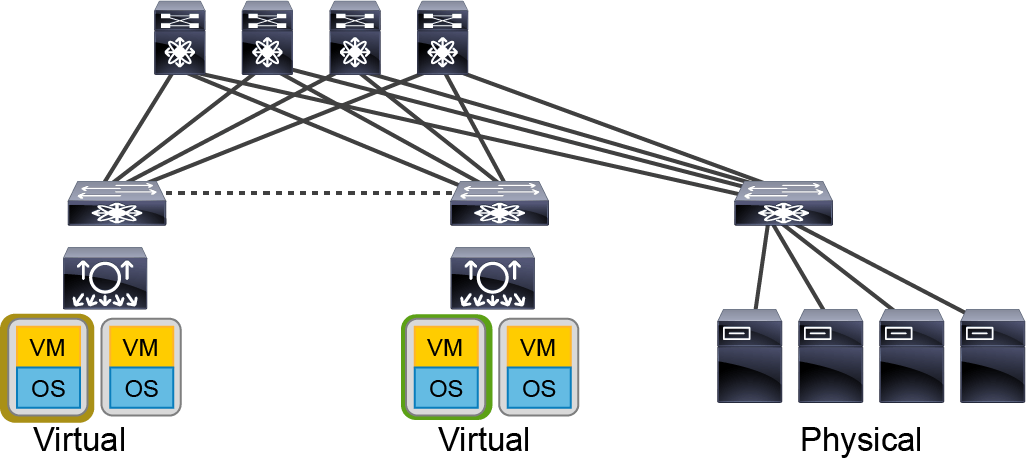
Refer to the following figure. You add a few bare-metal servers to your data center, which was running only VMs previously. You want the bare-metal servers to communicate with the VMs directly on the same Layer 2 network. How should you configure the network to meet the described requirement?
Content Review Question
One of your tenants is leasing multiple VXLAN connections from you. This tenant now wants their yellow VXLAN and green VXLAN to communicate, but remain two separate VXLANs for easier security control. Which of these solutions can you employ?
Content Review Question
Which two interfaces does each VTEP function have? (Choose two.)
Content Review Question
What are two benefits of using the MP-BGP EVPN control plane for VXLAN? (Choose two.)
Content Review Question
You are using MP-BGP EVPN and you decide to use a Distributed Anycast Gateway. Which statement is true?